Home / Tattoo Ideas / Mandala for Men
Mandala Tattoo Designs for Men: Balance and Meditation and symmetry
Bolder mandala designs for men: balance, meditation and symmetry. Explore real placements, styles and sample designs, then generate your own mandala tattoo.
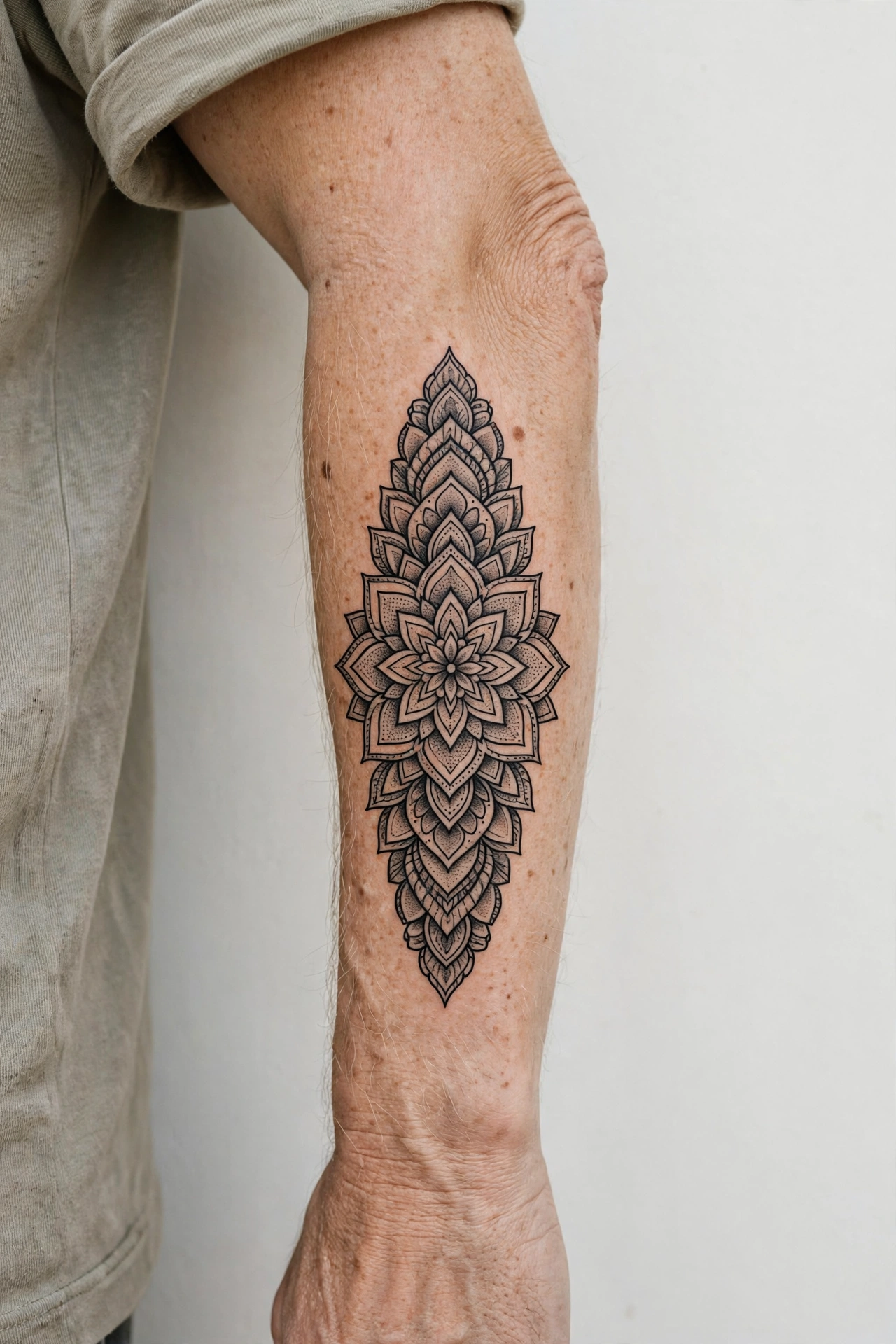
Design Gallery
Try on your skin
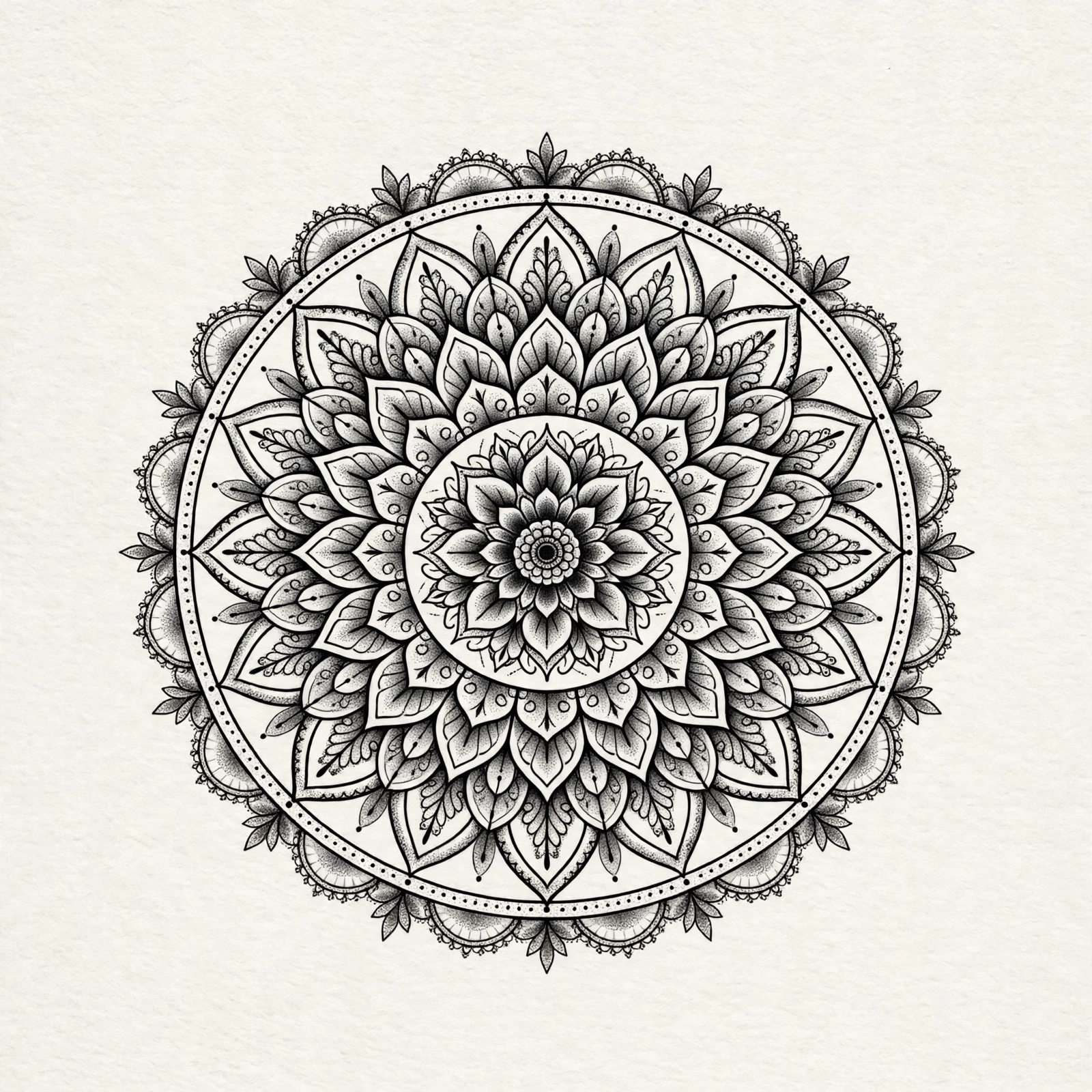 Try on your skin

 Try on your skin

 Try on your skin

 Try on your skin

 Try on your skin

 Try on your skin

 Try on your skin

See This Mandala On Your Own Body
✓ Real body preset photos ✓ Size, rotation and opacity controls ✓ Runs privately in your browser
What a Mandala Tattoo Means for Men
For men, mandala designs often lean bolder: larger scale, heavier line weight, and placements that follow muscle lines such as the upper arm, chest, shoulder and calf. Blackwork, black and grey and Japanese treatments are popular because they read strongly at a distance and age with confidence.
For men, the same balance, meditation and symmetry story often gets told at larger scale: a mandala that reads from across the room, placed where muscle lines carry the composition. Bigger is not better by itself — detail still needs room, and a crowded small piece ages worse than a clean large one.
Quick Facts
| Top Placement | Mandalas need flat, symmetrical placements and patience. |
|---|---|
| Pain Level | Moderate on chest and calf, lower on upper arm and shoulder. Typical for most placements. |
| Healing Time | About 2 to 3 weeks on the surface, 2 to 3 months to fully settle. Typical range. |
| Avg Cost | Small pieces often start around $80 to $150; medium detailed work commonly runs $200 to $500 in US studios. Typical range, artist quotes vary. |
Best Styles for a Mandala Tattoo for Men
Hold the subject steady and generate it in Blackwork, Japanese and Neo Traditional. The comparison teaches you more in five minutes than hours of scrolling, because everything except style stays the same.
Pro Tip: Generate the same mandala idea in Blackwork, Japanese and one color style before you decide. Style changes the meaning a design sends, not just how it looks.
Placement Guidance for Men
For men, mandala designs usually sit where muscle lines carry them: upper arm, chest, shoulder and calf. Mandalas need flat, symmetrical placements and patience. Bigger reads better here — a mandala that is too small loses the detail that makes the subject recognizable.
As a size guide for men: go larger than you first think — a mandala at 15cm and above holds detail and reads from a distance, while a small version can look cramped once the lines settle. Use the try on tool to test size on your own photo, and check the likely price with the cost calculator.
Generate Your Mandala Tattoo
Choose a tattoo style
Select a style
Describe your idea
Start with a suggestion or enter your own
Personalize your design
Body area, color and detail
Free · No sign-up needed to create
Optional: sign in to save every design to your dashboard, forever
See your tattoo before you ink
Preview the style, placement and overall look before making it permanent.
Need inspiration? Explore the gallery
Explore More Tattoo Styles & Subjects
Frequently Asked Questions
What does a mandala tattoo mean?
Mandala tattoos are most often chosen for balance, meditation and symmetry. Meaning is personal, and many people adapt the symbolism to their own story.
Where should I place a mandala tattoo?
For men, mandala designs usually sit where muscle lines carry them: upper arm, chest, shoulder and calf. Mandalas need flat, symmetrical placements and patience. Bigger reads better here — a mandala that is too small loses the detail that makes the subject recognizable. Placement also depends on the size and style you choose.
What style suits a mandala tattoo best?
Popular choices include Blackwork, Black and Grey, Japanese, Neo Traditional. Bold styles age best at small sizes, while realism needs more room.
Can I generate a mandala tattoo with AI?
Yes. Describe your mandala idea in the generator on this page, pick a style and placement, and create concepts free.
Do mandala tattoos for men need to be big?
No. Scale is a choice, not a rule — but mandala designs carry detail that small sizes can lose, so men often go medium to large on the upper arm, chest, shoulder or calf, where the composition has room to breathe.
References
- American Academy of Dermatology — Tattoos: skin care basics, risks and aftercare
- U.S. Food & Drug Administration — Think Before You Ink: Tattoo Safety